Easter Island Moai
World famous giant heads
The Moai (meaning statue) are monolithic human figures carved by the Rapa Nui people on Easter Island, in eastern Polynesia between 1250-1500. Nearly half of the statues at the main quarry Rano Raraku but hundreds were transported and set on stone platforms called *ahu*. They are chiefly living faces (*aringa ora*) of deified ancestors (*aringu ora ata tepuna*) who gazed inland across their clan lands when the European first visited the island in 1722, however they had fallen b the 19th century although it is unclear why. It could possibly be as a result of the contact with Europeans or internecine tribal wars.
Their minimal style relates to forms that are found throughout Polynesia. The over-large heads (a 3-5 ratio between head and trunk sculptural trait that show the Polynesian belief in the sanctity of chiefly head) have heavy brows, elongated noses and the lips protrude in a thin pout. The ears are also long and oblong like the noses. The jaw lines stand out vs truncated necks and arms carved in bas relief and rest against the body in different positions. The average height was about 4m (13ft) with the width at the base around 1.6m (5.2ft) and weigh around 12.5 tonnes.
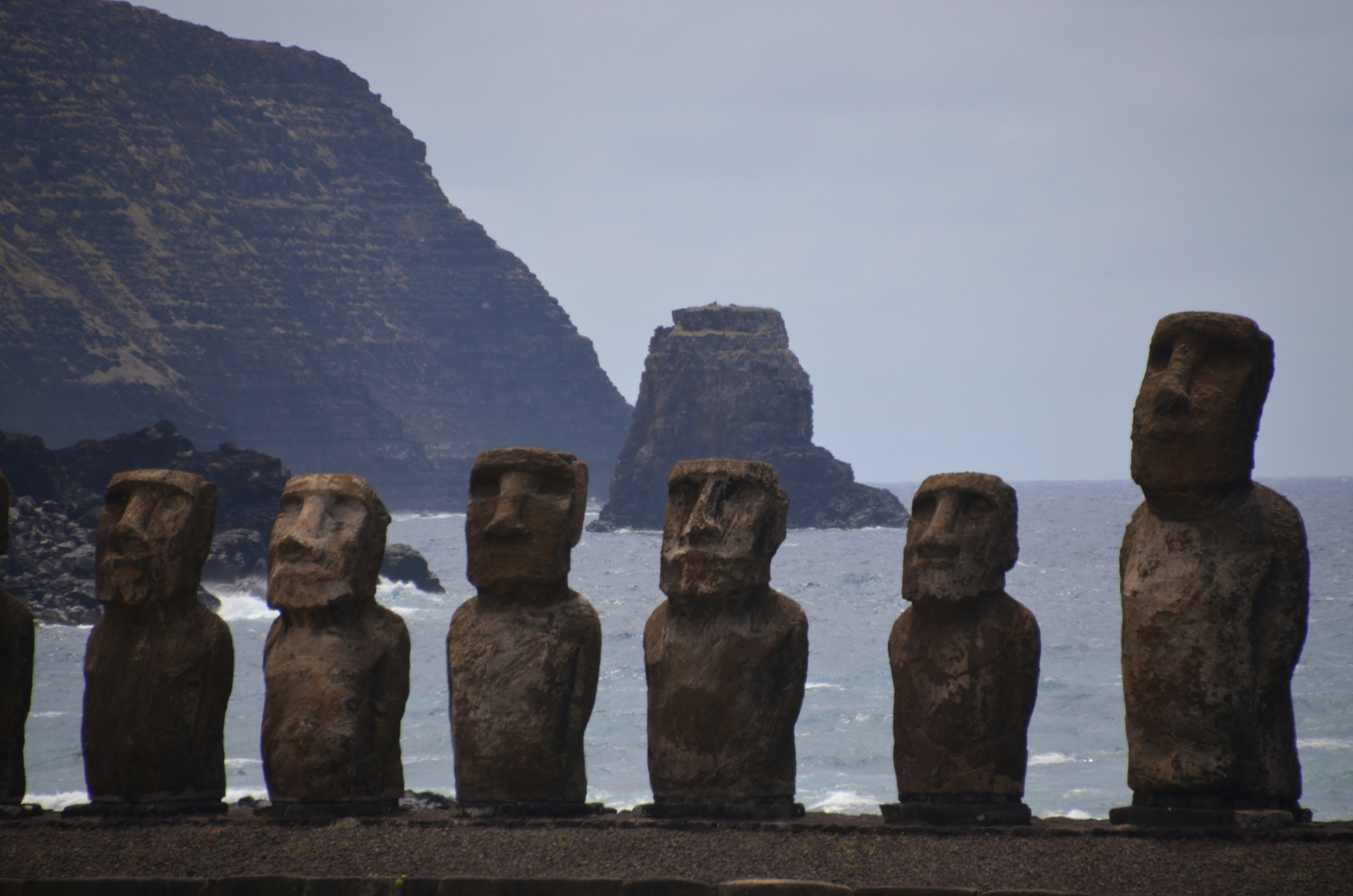
Photo by Hal Cooks on Unsplash
In 1979 a team of archaeologists discovered eye sockets were designed to hold coral eyes with either black obsidian or red scoria pupils. Each mo’ai had status and it has been suggested that “the larger statue placed on ahu, the more mana the chief who commissioned it” and given the different sizes there was competition for the grandest statue in Easter Island culture. The quarries in Rano Raraku appear to be abandoned abruptly with many stone tools left and had completed mo’ai left outside and many incomplete ones were left in situ.
The Rapa Nui National Park and mo’ai are on 1972 convention concerning the protection of the worlds cultural and natural heritage. They were added to UNESCO World Heritage sites in 1994.
Did you know?
The tallest Moai called Paro was nearly 10m (32ft) high and weighed 82 tonnes and the heaviest at Ahu Tongariki weighed 86 tonnes.